Advertisement

Understanding Programmatic Advertising: The Future of Digital Marketing

Programmatic advertising has revolutionized digital marketing by automating the buying and selling of ad space. Unlike traditional ad placements, which require manual negotiations, programmatic advertising leverages artificial intelligence (AI) and real-time bidding (RTB) to place ads efficiently.

What is Programmatic Advertising?

Programmatic advertising is an automated process that uses AI and data-driven algorithms to purchase digital ad inventory. It enables advertisers to reach their target audience with precision, ensuring that ads are displayed to the right users at the right time.

How Does It Work?

  1. Real-Time Bidding (RTB): Advertisers bid for ad placements in milliseconds, and the highest bid wins the ad slot.
  2. Private Marketplaces (PMPs): A select group of advertisers bid for premium ad inventory in an exclusive setting.
  3. Programmatic Direct: Advertisers buy ad space directly from publishers at a fixed price without bidding.

Benefits of Programmatic Advertising

  • Efficiency: Automates the ad-buying process, saving time and reducing costs.
  • Targeting: Uses audience data to ensure ads reach the most relevant users.
  • Real-Time Optimization: Advertisers can analyze campaign performance and adjust strategies instantly.
  • Cross-Channel Reach: Enables ads to be displayed across multiple platforms, including mobile, video, CTV, and OTT.

Conclusion

Programmatic advertising is shaping the future of digital marketing by providing data-driven, automated, and efficient ad placements. As AI and machine learning continue to evolve, programmatic advertising will become even more sophisticated, offering advertisers greater control and higher returns on investment.

Evolution of CTV Advertising in 2024

The landscape of advertising has transformed dramatically with the rise of Connected TV (CTV). As we move through 2024, CTV advertising is not only maturing but also setting new benchmarks for targeted, interactive, and data-driven advertising. Here’s an in-depth look at the key trends, challenges, and best practices shaping CTV advertising this year.

Programmatic Advertising Growth

Programmatic advertising continues to dominate the CTV space, thanks to its ability to deliver highly targeted ads efficiently. In 2024, advancements in AI and machine learning are pushing programmatic capabilities even further, allowing advertisers to reach specific audiences with precision. This automation is not only improving ad targeting but also enhancing overall ad spend efficiency, making it a critical component of any successful CTV advertising strategy.

Interactive and Shoppable Ads

One of the most exciting developments in CTV advertising is the rise of interactive and shoppable ads. These formats engage viewers directly, allowing them to interact with the content. Imagine watching a commercial for a new gadget and being able to click on the screen to purchase it instantly. This level of engagement not only captures viewers’ attention but also drives higher conversion rates, making it a powerful tool for brands.

Addressable Advertising

Addressable TV has revolutionized how ads are delivered to households. Instead of a one-size-fits-all approach, addressable advertising enables different ads to be shown to different households watching the same program. This personalization increases the relevance of ads, thereby enhancing viewer engagement and improving return on investment (ROI) for advertisers.

Data Privacy and Compliance

With the increasing focus on data privacy and regulations like GDPR and CCPA, compliance remains a top priority in 2024. Advertisers must navigate the complex landscape of data privacy to ensure they are collecting, using, and storing data transparently and ethically. Obtaining explicit consent and being clear about data usage are crucial steps in building trust with audiences.

Cross-Device Targeting and Measurement

Consumers today use multiple devices, and CTV advertising is evolving to create a seamless experience across these platforms. Integrating CTV ads with mobile and desktop devices allows for cohesive campaigns that can track and attribute ad performance more accurately. Advanced analytics and measurement tools are now available to help advertisers understand the impact of their campaigns across different devices, providing a more holistic view of ad performance.

Enhanced Creative Formats

The quality of creative content is more important than ever. High-definition formats like 4K HDR, along with immersive technologies such as augmented reality (AR) and virtual reality (VR), are becoming mainstream in CTV advertising. These formats offer a richer, more engaging viewing experience that can capture the attention of even the most discerning viewers.

Ad-Supported Streaming Services

The landscape of streaming services is also shifting, with major players like Netflix and Disney+ introducing ad-supported tiers. This expansion offers new opportunities for advertisers to reach audiences that prefer free or lower-cost subscription options. The increase in ad-supported inventory is a boon for advertisers looking to extend their reach.

Audience Targeting and Segmentation

Enhanced audience segmentation is allowing advertisers to target viewers based on behavioral data, viewing habits, and demographics more effectively. This precise targeting ensures that the right message reaches the right audience, significantly improving ad effectiveness.

Challenges in CTV Advertising

Despite its growth, CTV advertising faces challenges. The fragmented CTV landscape, with numerous platforms and devices, can make consistent messaging difficult. Standardizing measurement and reporting across these platforms is essential to overcoming this challenge. Additionally, ad fatigue remains a concern. Repetitive ads can lead to viewer disengagement, so maintaining creative diversity and managing ad frequency are key.

Best Practices for CTV Advertising

  1. Leverage Data Insights: Use data to understand audience preferences and optimize ad placements. Continually analyze performance metrics to refine targeting strategies.
  2. Focus on Quality Creative: Invest in high-quality, engaging creative content that resonates with the audience. Test different ad formats and messages to see what works best.
  3. Ensure Compliance: Stay updated with data privacy regulations and ensure all practices are compliant. Be transparent with viewers about data usage and obtain necessary consents.
  4. Ad Frequency Management: Monitor ad frequency to avoid overexposure and ad fatigue. Use frequency capping to control the number of times an ad is shown to the same viewer.
  5. Cross-Platform Integration: Integrate CTV campaigns with other digital channels for a holistic advertising approach. Use consistent messaging and creative across platforms for better brand recall.

The Future of CTV Advertising

As technological advancements continue, the future of CTV advertising looks promising. AI and machine learning will further enhance targeting and measurement capabilities, while emerging ad formats like AR and VR will offer more engaging experiences. With increasing investments in CTV advertising, brands that adapt to these trends and best practices will be well-positioned to succeed in this dynamic landscape.

By staying ahead of these developments and embracing innovative strategies, advertisers can leverage the full potential of CTV to connect with audiences in meaningful ways.

Standard Banner Sizes in Digital Advertising

Common Standard Banner Sizes

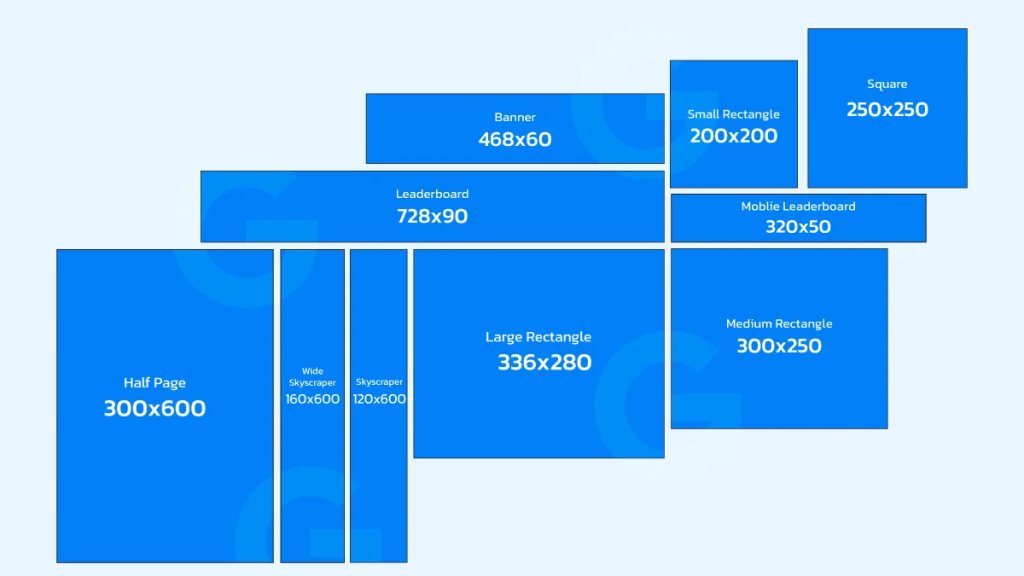
  1. Leaderboard (728×90): The leaderboard is a popular banner size characterized by its horizontal layout. It is typically placed at the top of web pages and is ideal for showcasing brand messages, promotions, and calls-to-action.
  2. Medium Rectangle (300×250): The medium rectangle is a versatile banner size that fits seamlessly within content sections of websites. It offers ample space for compelling visuals and engaging content, making it suitable for both desktop and mobile advertising.
  3. Skyscraper (160×600): The skyscraper banner size features a tall and narrow layout, making it well-suited for sidebars and vertical ad placements. It provides ample visibility and stands out in cluttered website layouts, making it effective for driving brand awareness and engagement.
  4. Square (250×250): The square banner size offers a balanced and compact layout, making it suitable for placement within content blocks and sidebar widgets. It provides advertisers with a versatile option for promoting products, services, and special offers.
  5. Large Rectangle (336×280): The large rectangle is a spacious banner size that offers ample room for impactful visuals and persuasive messaging. It is often placed within article content and serves as a focal point for capturing audience attention and driving conversions.

Understanding Digital Advertising Metrics: CPC, CPM, CPL, and CPA

In the realm of digital advertising, understanding key metrics is essential for marketers aiming to optimize their campaigns and drive meaningful results. Among the plethora of metrics available, CPC, CPM, CPL, and CPA stand out as fundamental indicators of campaign performance and effectiveness. In this article, we delve into the definitions, functionalities, and significance of these metrics, shedding light on their roles in the digital advertising landscape.

CPC: Cost Per Click

Definition: Cost Per Click (CPC) is a pricing model where advertisers pay for each click on their ads. It is one of the most common metrics used in paid search and display advertising campaigns.

Functionality: Advertisers bid on keywords or ad placements, and they are charged each time a user clicks on their ad. CPC campaigns are often associated with search engine marketing (SEM) platforms like Google Ads and Bing Ads, as well as social media advertising platforms such as Facebook Ads and LinkedIn Ads.

Significance: CPC is an important metric for measuring the effectiveness of ad campaigns in driving traffic to a website or landing page. It allows advertisers to assess the cost-effectiveness of their campaigns and optimize their bidding strategies to achieve desired objectives.

CPM: Cost Per Mille (Thousand Impressions)

Definition: Cost Per Mille (CPM), also known as Cost Per Thousand Impressions, is a pricing model where advertisers pay for every one thousand impressions of their ad.

Functionality: In CPM campaigns, advertisers pay a fixed rate for every thousand impressions, regardless of whether users interact with the ad or not. CPM is commonly used in display advertising, including banner ads, native ads, and video ads.

Significance: CPM is a valuable metric for increasing brand visibility and awareness. It allows advertisers to reach a large audience and generate impressions at scale, making it suitable for branding and awareness-focused campaigns.

CPL: Cost Per Lead

Definition: Cost Per Lead (CPL) is a pricing model where advertisers pay for each qualified lead generated through their advertising efforts.

Functionality: CPL campaigns are prevalent in lead generation and performance marketing initiatives. Advertisers define specific actions or criteria that constitute a qualified lead, such as form submissions, email sign-ups, or app downloads.

Significance: CPL provides advertisers with a measurable way to assess the efficiency of their lead generation efforts. By tracking the cost per lead acquired, marketers can evaluate campaign performance and allocate resources effectively to maximize ROI.

CPA: Cost Per Acquisition

Definition: Cost Per Acquisition (CPA), also known as Cost Per Action, is a pricing model where advertisers pay for a specific action or conversion resulting from their advertising campaigns.

Functionality: CPA campaigns focus on driving desired actions such as purchases, sign-ups, registrations, or downloads. Advertisers define the conversion goals, and they are charged only when users complete the specified action.

Significance: CPA is a critical metric for measuring the return on investment (ROI) of advertising campaigns. By tracking the cost per acquisition, advertisers can evaluate the effectiveness of their marketing efforts in driving meaningful outcomes and achieving business objectives.

Conclusion: In the dynamic landscape of digital advertising, CPC, CPM, CPL, and CPA serve as vital metrics for assessing campaign performance, optimizing strategies, and maximizing ROI. By understanding the functionalities and significance of these metrics, marketers can make informed decisions and drive impactful results in their digital advertising endeavors. As the digital advertising ecosystem continues to evolve, leveraging these key metrics will remain essential for achieving success in today’s competitive marketplace.

Difference Between DSP and SSP in Programmatic Advertising

In the realm of programmatic advertising, the terms Demand-Side Platform (DSP) and Supply-Side Platform (SSP) play crucial roles in facilitating the buying and selling of digital ad inventory. While they both operate within the programmatic ecosystem, their functions and objectives are distinct. Understanding the difference between DSP and SSP is essential for advertisers, publishers, and marketers aiming to navigate the complexities of digital advertising efficiently.

DSP: Demystifying Demand-Side Platforms (DSP)

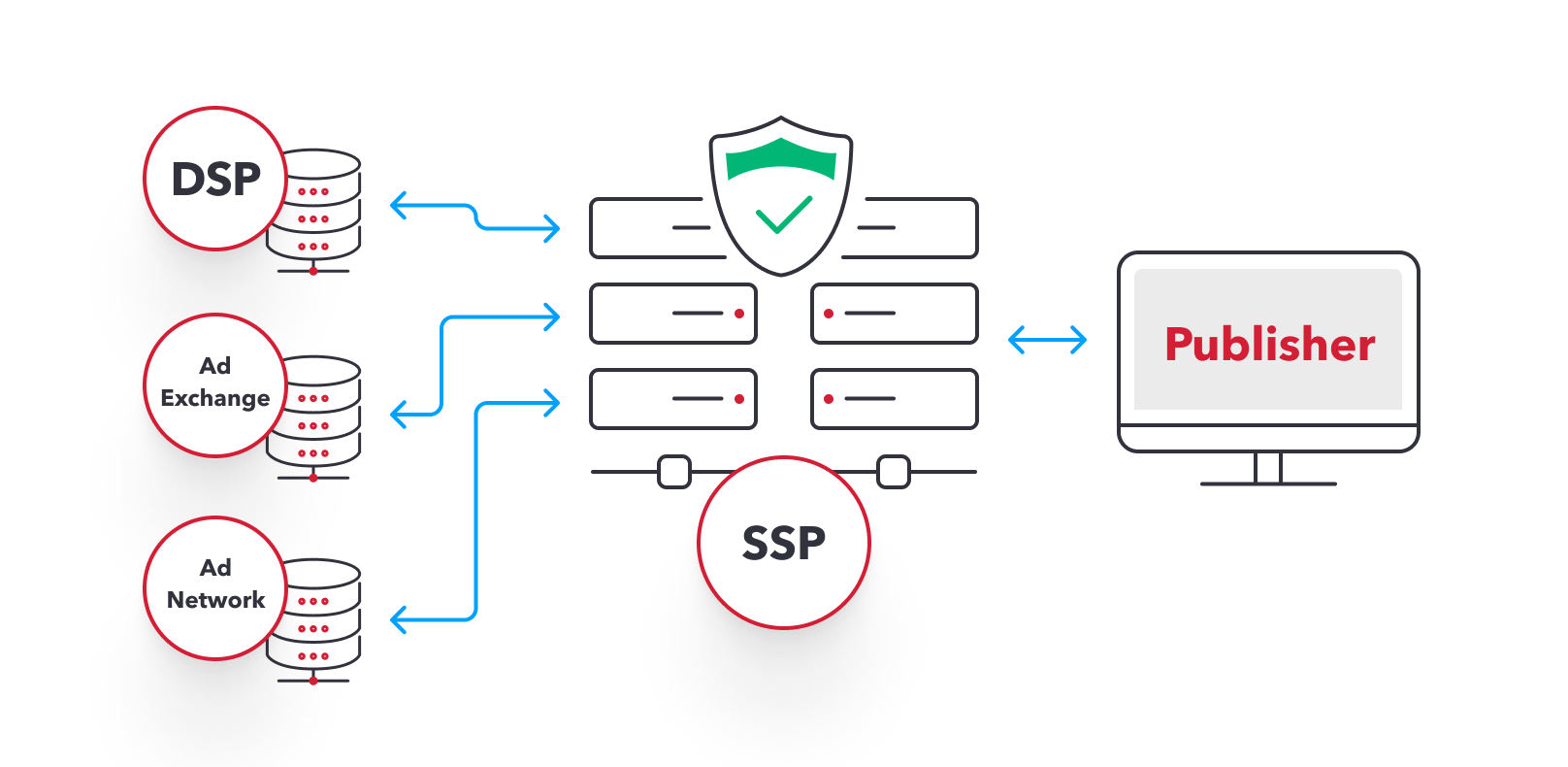
Definition and Functionality: A Demand-Side Platform (DSP) is a technology platform utilized by advertisers and agencies to purchase digital ad inventory across various publishers and ad exchanges. The primary function of a DSP is to enable advertisers to manage, optimize, and execute their ad campaigns in real-time through a single interface.

Key Features and Capabilities:

  • Targeting Capabilities: DSPs offer sophisticated targeting options, including demographic targeting, behavioral targeting, contextual targeting, and geographic targeting.
  • Real-Time Bidding (RTB): DSPs leverage RTB technology to bid on ad impressions in real-time based on predetermined criteria and user data.
  • Optimization: DSPs use algorithms and data analysis to optimize ad campaigns for maximum performance and efficiency.
  • Reporting and Analytics: DSPs provide comprehensive reporting and analytics tools to track campaign performance, audience engagement, and ROI.

SSP: Deciphering Supply-Side Platforms (SSP)

Definition and Functionality: A Supply-Side Platform (SSP) is a technology platform utilized by publishers and app developers to manage and monetize their digital ad inventory. SSPs serve as intermediaries between publishers and ad exchanges, enabling publishers to sell their ad inventory programmatically.

Key Features and Capabilities:

  • Inventory Management: SSPs allow publishers to manage and organize their ad inventory across various formats, including display, video, and mobile.
  • Yield Optimization: SSPs use algorithms and pricing rules to optimize the value of ad impressions and maximize revenue for publishers.
  • Real-Time Reporting: SSPs provide real-time reporting and insights into ad performance, fill rates, and revenue metrics.
  • Header Bidding Integration: Many SSPs support header bidding technology, allowing publishers to offer their ad inventory to multiple demand sources simultaneously.

Distinguishing Between DSP and SSP:

While both DSPs and SSPs operate within the programmatic advertising ecosystem, they serve distinct purposes and cater to different stakeholders.

  • DSPs are designed for advertisers seeking to reach their target audience across various digital channels through targeted ad placements.
  • SSPs are designed for publishers looking to monetize their digital properties by selling ad inventory to advertisers and agencies programmatically.

Conclusion: In conclusion, understanding the difference between DSP and SSP is crucial for navigating the complexities of programmatic advertising effectively. While DSPs enable advertisers to purchase ad inventory and target audiences across multiple channels, SSPs empower publishers to manage and monetize their digital ad inventory efficiently. By leveraging the capabilities of both DSPs and SSPs, advertisers and publishers can optimize their digital advertising strategies and drive better results in today’s dynamic digital landscape.

Navigating Marketing Frontiers: Digital Marketing vs. Door-to-Door Marketing

The Digital Era: Unraveling the Dynamics of Marketing

In the dynamic realm of marketing, businesses are faced with a pivotal choice between traditional door-to-door approaches and the expansive landscape of digital marketing. As technology continues to reshape consumer behaviors, understanding the nuances of these two strategies is crucial for crafting a successful marketing mix.

The Power of Pixels: Digital Marketing’s Dominance

Digital marketing has become synonymous with the modern era, leveraging the vast online landscape to connect with a global audience. The reach and scalability offered by digital platforms are unparalleled, allowing businesses to engage with their target demographic in real-time. Social media, search engine optimization, and email campaigns enable precise targeting, making it easier to tailor messages to specific consumer segments.

The data-driven nature of digital marketing empowers businesses with insights into consumer behavior. Analytics tools provide valuable metrics, helping refine marketing strategies for optimal results. Cost-effectiveness and the ability to measure return on investment (ROI) make digital marketing an attractive proposition for businesses of all sizes.

Knocking on Doors: The Resilience of Door-to-Door Marketing

Despite the digital revolution, door-to-door marketing retains its relevance, especially for localized and community-centric businesses. This traditional approach allows for face-to-face interactions, building a personal connection with potential customers. Door-to-door marketing is particularly effective in industries where building trust is crucial, such as home services or local businesses.

The tangible nature of door-to-door marketing enables businesses to leave physical materials like flyers or samples directly in the hands of consumers. This tactile engagement can create a lasting impression and contribute to brand recall. Additionally, in areas with limited digital access, door-to-door marketing remains a viable and effective strategy.

Striking a Balance: Integrated Marketing Strategies

The most successful marketing strategies often strike a balance between the digital and the traditional. Businesses can harness the power of digital marketing to reach a broader audience and build brand awareness. Simultaneously, door-to-door marketing can complement digital efforts by fostering a local presence and establishing a personal touch with potential customers.

Integrated marketing campaigns allow businesses to leverage the strengths of both approaches, creating a comprehensive strategy that adapts to diverse consumer preferences. The key is understanding the target audience, industry dynamics, and the unique advantages each method brings to the table.

In the evolving landscape of marketing, the choice between digital marketing and door-to-door strategies isn’t binary. Businesses that can navigate both realms stand to gain a competitive edge, tapping into the best of both worlds to create a holistic and effective marketing strategy.

The Power of Programmatic Advertising in Transforming Digital Marketing

Unleashing the Potential of Programmatic Advertising

In the ever-evolving landscape of digital marketing, programmatic advertising has emerged as a game-changer, revolutionizing the way businesses connect with their target audience. This automated, data-driven approach to buying and placing ads has proven to be a highly effective strategy for maximizing ROI and optimizing ad spend.

How Programmatic Advertising Works

Programmatic advertising leverages advanced algorithms and real-time bidding to automate the buying process for ad placements. It utilizes data and machine learning to target specific audiences, ensuring that ads are delivered to the right people at the right time. This method eliminates the need for manual intervention in ad buying, making the process more efficient and cost-effective.

One of the key components of programmatic advertising is the use of demand-side platforms (DSPs) and supply-side platforms (SSPs). DSPs allow advertisers to purchase ad inventory across multiple ad exchanges, while SSPs enable publishers to sell their ad space programmatically. This seamless integration of technology streamlines the entire advertising ecosystem.

Targeting Precision: Reaching the Right Audience

One of the standout features of programmatic advertising is its ability to deliver highly targeted campaigns. Through the analysis of user behavior, demographics, and other relevant data, advertisers can tailor their messages to specific audience segments. This level of precision ensures that ads are not only seen by the right people but also resonate with their interests and preferences.

The real-time nature of programmatic advertising enables advertisers to adjust their targeting parameters on the fly. If a particular demographic is responding positively to an ad, the campaign can be optimized to allocate more budget to that segment, maximizing the impact of the campaign.

Optimizing Ad Spend – Maximizing Return on Investment

Traditional advertising methods often involve upfront commitments and fixed costs. Programmatic advertising, on the other hand, allows advertisers to bid for impressions in real-time, optimizing their spending based on performance data. This flexibility ensures that advertisers only pay for impressions that align with their campaign objectives, ultimately maximizing the return on investment.

Additionally, programmatic advertising provides detailed insights and analytics, allowing advertisers to track the performance of their campaigns in real-time. This data-driven approach enables quick decision-making and adjustments, ensuring that campaigns remain effective and efficient throughout their duration.

The Future of Programmatic Advertising

As technology continues to advance, the future of programmatic advertising looks promising. The integration of artificial intelligence and machine learning will further enhance targeting capabilities and improve ad personalization. Enhanced privacy measures and data protection regulations may also shape the evolution of programmatic advertising, prompting the industry to prioritize transparency and user consent.

In conclusion, programmatic advertising has become an indispensable tool for advertisers looking to navigate the complexities of the digital landscape. Its ability to automate processes, target specific audiences with precision, and optimize ad spend makes it a cornerstone of modern digital marketing strategies. As technology continues to evolve, the influence of programmatic advertising is only set to grow, shaping the future of how brands connect with their audiences online.

Exit mobile version