Advertisement

Publisher Monetization Strategies in 2025

Introduction

For publishers, monetization is no longer just about filling ad slots. With audience behavior shifting, third-party cookies fading, and new channels like OTT and CTV growing rapidly, publishers need innovative ways to generate revenue.

In 2025, successful publishers are combining technology, data, and partnerships to maximize yield. Let’s explore the most effective publisher monetization strategies in 2025 and how you can implement them.


1. Embracing Video Advertising

Video continues to dominate digital consumption, with online video ad spend projected to cross $200 billion globally in 2025.

  • In-Stream Ads: Pre-roll, mid-roll, and post-roll ads within video content.
  • Out-Stream Ads: Video ads embedded in articles and mobile feeds.
  • Interactive & Shoppable Video: Ads that let users engage or purchase directly.

👉 Publishers offering video inventory see higher CPMs and engagement rates compared to display ads.


2. Leveraging OTT and CTV Inventory

Audiences are moving from traditional TV to streaming platforms. For publishers, OTT and CTV monetization is a goldmine.

  • Premium Placements: Long-form video content commands higher ad rates.
  • Addressable Ads: Advertisers target households, not just broad demographics.
  • Measurement & Attribution: Advanced tools now track ad performance across devices.

By integrating with platforms like Adsolut Media’s Playstream marketplace, publishers gain direct access to brand demand for OTT and CTV inventory.


3. Header Bidding for Yield Optimization

Traditional waterfall setups limited publisher revenue. Header bidding allows multiple demand partners to bid simultaneously, ensuring the highest possible CPM.

  • Benefits:
    • Increased competition for inventory
    • Higher yield and transparency
    • Better control over ad stack

👉 Publishers who adopt header bidding typically see 20–30% uplift in revenue.


4. Building First-Party Data Strategies

With the decline of third-party cookies, first-party data is the new king. Publishers must invest in collecting and activating their audience data.

  • Tactics:
    • Encourage logins & subscriptions
    • Conduct surveys and polls
    • Use content personalization tools
  • Benefits:
    • Stronger advertiser demand
    • Higher CPMs for targeted campaigns
    • Long-term competitive advantage

5. Exploring Native Advertising

Native ads blend seamlessly into content, providing a less intrusive user experience.

  • Formats: Sponsored content, recommendation widgets, in-feed ads.
  • Benefits: Higher click-through rates (CTR) compared to banners.
  • Growth: Native ad spend is expected to account for 65% of display revenue by 2025.

👉 Publishers can create sponsored articles, videos, and branded content for advertisers while maintaining editorial integrity.


6. Subscription and Membership Models

Not all revenue needs to come from advertising. Publishers are increasingly turning to direct audience monetization.

  • Paywalls & Subscriptions: Premium content behind a paywall.
  • Membership Perks: Exclusive access, ad-free experiences, or community features.
  • Hybrid Models: Freemium content supported by both ads and subscriptions.

This model works best for publishers with loyal audiences and niche content.


7. Programmatic Direct Deals & Private Marketplaces (PMPs)

Premium publishers can negotiate direct programmatic deals with advertisers for guaranteed placements.

  • Advantages:
    • Better pricing control
    • Brand-safe environment
    • Long-term advertiser relationships

By participating in private marketplaces (PMPs), publishers attract premium advertisers while ensuring transparency and higher CPMs.


8. Diversifying Revenue with Commerce and Affiliate Marketing

Publishers can monetize content through affiliate links, product reviews, and e-commerce integrations.

  • Example: A tech blog earns commission when readers buy gadgets through affiliate links.
  • Growing trend: Content-commerce partnerships with brands.

👉 Affiliate marketing is projected to generate $15 billion+ in publisher revenue by 2025.


Challenges in Publisher Monetization

While opportunities are huge, challenges remain:

  • Ad Blocking: Users opting out of ads reduce inventory value.
  • Ad Fraud: Fake impressions and bots hurt credibility.
  • Fragmented Demand: Managing multiple SSPs and DSPs can be complex.
  • Privacy Regulations: Compliance with GDPR, CCPA, and DPDP Act in India.

This is why publishers increasingly partner with trusted AdTech companies to manage monetization efficiently.


Adsolut Media’s Publisher-First Approach

At Adsolut Media, we focus on maximizing publisher yield while ensuring transparency.

  • Playstream Marketplace: Connecting publishers with demand from brands, SSPs, and agencies across India, MENA, and APAC.
  • Video, OTT, and CTV Demand: Unlocking premium inventory monetization.
  • Yield Optimization: Advanced bidding solutions to maximize CPMs.
  • Long-Term Partnerships: Sustainable growth through trusted collaborations.

Our mission is simple: help publishers unlock the full value of their audience and content.


Conclusion

Publisher monetization in 2025 is about more than just selling ad space. It’s about combining video, OTT/CTV, first-party data, and diversified revenue streams with the right technology and partners.

👉 Whether you’re a large media house or a niche content publisher, the opportunities are massive. And with Adsolut Media by your side, you can stay ahead of the curve, boost revenue, and future-proof your business.
Programmatic Advertising: The Future of Digital Media Buying

Introduction

Gone are the days when advertisers relied solely on manual negotiations and direct deals with publishers. In today’s fast-paced digital world, programmatic advertising has become the backbone of media buying. By 2025, programmatic is projected to account for over 90% of global digital ad spend, transforming how brands connect with audiences and how publishers monetize inventory.

But what exactly is programmatic advertising, how does it work, and why is it the future of digital media buying? Let’s break it down.


What is Programmatic Advertising?

Programmatic advertising is the automated process of buying and selling ad inventory through technology platforms instead of traditional manual methods.

Instead of salespeople calling publishers to book ad placements, programmatic uses algorithms, data, and real-time bidding (RTB) to place ads instantly where they’re most effective.

  • Advertisers use DSPs (Demand-Side Platforms) to buy ads.
  • Publishers use SSPs (Supply-Side Platforms) to sell inventory.
  • Ad Exchanges act as the marketplace connecting both sides.

How Does Programmatic Advertising Work?

  1. Advertiser sets campaign goals (audience, budget, formats).
  2. DSP evaluates opportunities across multiple publishers.
  3. SSP lists available inventory for auction.
  4. Real-Time Bidding (RTB) takes place in milliseconds.
  5. The highest bidder wins and the ad is served instantly.

👉 All this happens in the time it takes for a webpage or video to load.


Types of Programmatic Advertising

1. Real-Time Bidding (RTB)

  • Open marketplace auctions.
  • Advertisers bid in real-time for each impression.
  • Cost-efficient but less controlled.

2. Private Marketplaces (PMPs)

  • Invitation-only auctions with premium publishers.
  • Higher CPMs, but better brand safety and quality.

3. Programmatic Direct

  • Direct deals between advertiser and publisher, automated via tech.
  • Guaranteed inventory with fixed CPMs.

4. Preferred Deals

  • Negotiated fixed price but non-guaranteed inventory.
  • Allows testing premium placements before committing.

Benefits of Programmatic Advertising

For Advertisers

  • Precision Targeting: Audience segmentation based on demographics, interests, behavior.
  • Efficiency: Automation reduces manual work and costs.
  • Real-Time Optimization: Campaigns adjust instantly for best performance.
  • Scalability: Access to global inventory across thousands of publishers.

For Publishers

  • Higher Fill Rates: Multiple demand sources competing for impressions.
  • Increased Revenue: Yield optimization and premium demand access.
  • Better Inventory Control: Publishers set rules on pricing, formats, and buyers.
  • Access to Premium Buyers: Via PMPs and direct programmatic deals.

Challenges in Programmatic Advertising

Despite its advantages, programmatic isn’t without challenges:

  • Ad Fraud & Invalid Traffic (IVT): Bots and fake impressions hurt ROI.
  • Transparency Issues: Publishers often don’t see full revenue shares.
  • Brand Safety: Ads may appear next to inappropriate content.
  • Privacy Concerns: With cookie deprecation, targeting becomes complex.

👉 Overcoming these challenges requires trusted partners, advanced verification tools, and transparent marketplaces.


Programmatic Trends in 2025

1. AI-Driven Media Buying

AI algorithms optimize bids, creatives, and targeting in real time.

2. CTV and OTT Expansion

Streaming platforms are fueling massive growth in programmatic video.

3. Contextual Targeting

As cookies fade, contextual signals become critical for relevance.

4. Sustainability in Programmatic

“Green AdTech” initiatives focus on reducing carbon footprints from ad delivery.

5. Unified Identity Solutions

Universal IDs and first-party data collaborations are replacing third-party cookies.


Adsolut Media’s Programmatic Advantage

At Adsolut Media, we specialize in connecting publishers and advertisers through our Playstream marketplace.

  • For Advertisers: We provide premium OTT, CTV, and video web inventory across India, MENA, and APAC.
  • For Publishers: We ensure yield optimization with demand from top brands, SSPs, and local agencies.
  • Our USP: Transparency, scalability, and long-term partnerships.

By leveraging programmatic solutions, we help advertisers achieve performance goals while enabling publishers to maximize monetization.


Conclusion

Programmatic advertising is no longer the future—it’s the present reality of digital media buying. By 2025, automation, AI, and privacy-first solutions will define how ads are bought and sold.

For advertisers, programmatic means efficiency, targeting, and ROI. For publishers, it ensures revenue growth, premium demand, and scalability.

👉 With Adsolut Media’s Playstream marketplace, you gain a trusted partner to navigate the complexities of programmatic, ensuring success in the evolving digital landscape.

What is AdTech? A Complete Guide for Publishers & Advertisers

Introduction

The digital advertising industry has transformed dramatically over the past decade. What started with banner ads and direct deals has now evolved into a highly sophisticated ecosystem powered by automation, data, and technology. At the center of this transformation is AdTech—short for Advertising Technology.

But what exactly is AdTech? Why does it matter for publishers, advertisers, and agencies? And how can businesses leverage it to drive better outcomes in 2025 and beyond? Let’s dive into a complete guide.


What is AdTech?

AdTech (Advertising Technology) refers to the software, tools, and platforms that power digital advertising campaigns. It includes everything from ad servers, demand-side platforms (DSPs), and supply-side platforms (SSPs) to data management platforms (DMPs) and programmatic exchanges.

At its core, AdTech simplifies and automates the process of buying, selling, delivering, and measuring digital ads.

Simple Example

  • Advertiser’s goal: A fitness brand wants to reach young adults interested in home workouts.
  • Publisher’s goal: A lifestyle blog wants to monetize its audience through ads.
  • AdTech solution: A DSP allows the advertiser to target the right audience, while an SSP helps the publisher sell inventory efficiently. The ad exchange connects both sides in real time.

Why AdTech Matters

AdTech is the backbone of digital advertising because it:

  • Automates ad buying and selling
  • Improves targeting and personalization
  • Ensures transparency and efficiency
  • Enables data-driven decision making
  • Maximizes ROI for advertisers and revenue for publishers

Without AdTech, advertisers would struggle to scale campaigns, and publishers would find it harder to monetize audiences effectively.


Key Components of the AdTech Ecosystem

1. Ad Servers

These are platforms that deliver ads to websites, apps, or OTT platforms. They also track impressions, clicks, and conversions.

  • Example: Google Ad Manager

2. Demand-Side Platforms (DSPs)

DSPs allow advertisers and agencies to purchase ad inventory programmatically.

  • Benefit: Advertisers can target multiple publishers from a single platform.

3. Supply-Side Platforms (SSPs)

SSPs help publishers sell their inventory to multiple advertisers in real time.

  • Benefit: Publishers maximize fill rates and CPMs by connecting with multiple demand sources.

4. Ad Exchanges

These are digital marketplaces where DSPs and SSPs interact. They run real-time bidding (RTB) auctions to determine which ad appears.

5. Data Management Platforms (DMPs) & Customer Data Platforms (CDPs)

These platforms collect and organize audience data, enabling better targeting and personalization.

6. Creative Management Platforms (CMPs)

CMPs automate ad creative production and scaling across formats.


Types of AdTech

  1. Programmatic Advertising – Automated ad buying via DSPs, SSPs, and ad exchanges.
  2. Search Advertising – Ads shown on search engines like Google and Bing.
  3. Social Advertising – Ads on platforms like Meta, Instagram, TikTok, and LinkedIn.
  4. Video & OTT/CTV Advertising – Ads delivered on streaming platforms and connected TVs.
  5. Native Advertising – Ads designed to blend with the platform’s content.

Benefits of AdTech for Publishers

  • Better Monetization: Access to premium demand from global brands and agencies.
  • Yield Optimization: SSPs and header bidding maximize ad revenue.
  • First-Party Data Utilization: Publishers can sell audience insights at higher CPMs.
  • Access to New Formats: Video, OTT, and CTV open new revenue streams.

Benefits of AdTech for Advertisers

  • Precise Targeting: Reach the right audience using data-driven insights.
  • Real-Time Optimization: Campaigns are optimized automatically for performance.
  • Transparency: Access to performance metrics ensures ad spend efficiency.
  • Scalability: One campaign can run across thousands of publishers globally.

Challenges in AdTech

While AdTech offers countless opportunities, there are challenges:

  • Ad Fraud & Invalid Traffic – Fake impressions reduce ROI.
  • Privacy Regulations – GDPR, CCPA, and India’s DPDP Act restrict data use.
  • Fragmentation – Too many platforms create complexity.
  • Transparency Issues – Publishers often don’t see full revenue shares.

👉 This is where trusted partners like Adsolut Media make a difference.


Adsolut Media’s Role in the AdTech Ecosystem

At Adsolut Media, we act as a bridge between publishers and advertisers through our Playstream marketplace.

  • For Publishers: We manage inventory, optimize yield, and bring demand from top brands, SSPs, and agencies.
  • For Advertisers: We provide scalable, transparent, and premium ad inventory across Video Web, OTT, and CTV.
  • Our Regions: We specialize in India, MENA, and APAC markets.
  • Our Promise: Long-term collaborations, transparency, and sustainable growth.

By combining technology + expertise, we ensure publishers maximize revenue while advertisers achieve their performance goals.


The Future of AdTech

Looking ahead, AdTech will continue to evolve with:

  • AI-powered optimization
  • Privacy-first identity solutions
  • OTT & CTV dominance
  • Sustainable ad practices

Publishers and advertisers who adapt early will enjoy a competitive edge in 2025 and beyond.


Conclusion

AdTech isn’t just a buzzword—it’s the foundation of modern digital advertising. For publishers, it unlocks monetization opportunities; for advertisers, it ensures precision and performance.

👉 At Adsolut Media, we’re committed to helping partners navigate this landscape with innovative solutions, premium demand, and a future-ready marketplace.

Top AdTech Trends in 2025 You Can’t Ignore

Introduction

The digital advertising industry is evolving at lightning speed. From programmatic advertising to AI-driven targeting, publishers and advertisers are navigating a rapidly changing ecosystem. According to Statista, global ad spend is expected to surpass $1 trillion by 2025, with AdTech playing a central role in this growth.

But what’s next for the industry? Let’s explore the top AdTech trends in 2025 that publishers, advertisers, and agencies can’t afford to overlook.


1. Artificial Intelligence (AI) and Machine Learning (ML) in Ad Optimization

AI is no longer a buzzword—it’s the backbone of AdTech in 2025. Machine learning algorithms are reshaping how ads are delivered, optimized, and measured.

  • Predictive Targeting: AI analyzes user intent and context, ensuring ads reach the right audience at the right time.
  • Dynamic Creative Optimization (DCO): Ad creatives adapt automatically based on user behavior.
  • Fraud Detection: ML identifies suspicious traffic patterns, reducing invalid traffic and saving ad budgets.

👉 For publishers, this means higher fill rates and CPMs. For advertisers, it means better ROI with less wasted spend.


2. Contextual Advertising Makes a Strong Comeback

With third-party cookies phasing out, contextual advertising is back in the spotlight. Instead of relying on user tracking, ads are placed based on the content a user is consuming.

  • Example: A user reading a travel blog sees ads for flights and hotels.
  • Contextual targeting respects privacy while still being highly relevant.
  • AI-driven contextual engines now go beyond keywords, analyzing tone, sentiment, and visual content.

This trend empowers publishers to monetize content while staying privacy-compliant with regulations like GDPR, CCPA, and India’s DPDP Act.


3. Growth of OTT and CTV Advertising

The OTT (Over-the-Top) and CTV (Connected TV) boom is one of the most powerful shifts in digital advertising. By 2025, global CTV ad spend is projected to cross $30 billion.

  • Viewers are cutting the cord, moving from linear TV to streaming platforms.
  • Ad formats include pre-roll, mid-roll, and interactive shoppable ads.
  • Brands love CTV for its premium inventory and measurable audience insights.

👉 At Adsolut Media, our Playstream marketplace helps publishers unlock OTT and CTV demand across India, MENA, and APAC, connecting them with top brands and agencies.


4. Retail Media Networks (RMNs) Becoming Mainstream

Retail giants like Amazon, Walmart, and Flipkart are leading the charge in retail media advertising, allowing brands to run ads directly on e-commerce platforms.

  • Why it matters: RMNs give advertisers first-party purchase data.
  • Benefit for brands: Highly targeted ads at the point of purchase.
  • Publishers can explore partnerships to extend retail media beyond marketplaces.

By 2025, retail media is expected to become the third-largest digital advertising channel, after search and social.


5. First-Party Data Takes Center Stage

As third-party cookies disappear, first-party data is the new currency in digital advertising.

  • Publishers are building strong relationships with their audiences.
  • Tools like customer data platforms (CDPs) and identity graphs are critical.
  • Advertisers are partnering directly with publishers for data-driven deals.

👉 For publishers, this is a golden opportunity: collecting opt-in data helps boost CPMs and attract premium demand.


6. Attention Metrics Replace Impressions

The old model of counting impressions and clicks is losing relevance. In 2025, advertisers are focusing on attention metrics:

  • Viewability (Was the ad seen?)
  • Engagement time (How long did the user interact?)
  • Brand recall and sentiment analysis

These new KPIs ensure ad dollars go toward quality engagement, not just empty impressions. Publishers who deliver high-attention environments—like video content—stand to gain the most.


7. Sustainability and Green AdTech

Sustainability has entered digital advertising. Brands and agencies are asking tough questions:

  • How much carbon is produced by serving billions of impressions?
  • Can supply chains become more energy-efficient?
  • Should advertisers support publishers with eco-friendly practices?

“Green AdTech” solutions optimize programmatic bidding and reduce wasted impressions, lowering carbon footprints. In 2025, publishers aligning with sustainable ad practices will gain a competitive edge.


8. Identity Solutions & Privacy-First Targeting

With privacy regulations tightening worldwide, advertisers are adopting privacy-first identity solutions like:

  • Universal IDs (UID 2.0, LiveRamp ID)
  • Cohort-based targeting (groups instead of individuals)
  • Privacy sandbox from Google

Publishers and SSPs embracing these solutions will stay future-proof in a cookie-less world.


Conclusion: The Future of AdTech in 2025

AdTech in 2025 is about intelligence, privacy, and performance. AI, contextual targeting, OTT/CTV, retail media, first-party data, and sustainability are driving a new era of advertising.

For publishers, this is a chance to maximize monetization through premium inventory and smarter partnerships. For advertisers, it’s an opportunity to reach audiences with precision and transparency.

👉 At Adsolut Media, our Playstream marketplace connects publishers and advertisers across Video Web, OTT, and CTV, delivering innovative, scalable, and sustainable AdTech solutions. Together, we can shape the future of digital advertising.

OTT Consumption in India 2025: Market Trends and Growth Projections

Surging User Base

India’s OTT user base is expected to reach 600 million by 2025, driven by affordable data, smartphone penetration, and growing digital content demand.

Revenue Growth

The OTT video market in India is projected to generate $4.49 billion in revenue by 2025, fueled by both subscription-based (SVOD) and advertising-supported (AVOD) models.

Leading OTT Platforms & Market Share

  • Disney+ Hotstar – 26% market share, 38M paid users
  • Amazon Prime Video – 23% market share, 20M users
  • Netflix – 13% market share, 10M users
  • ZEE5 – 11% market share
  • JioCinema & Sony LIV – Growing rapidly

Subscription costs range from ₹149 to ₹1,499, catering to diverse audience segments.

Changing Viewing Habits

Over 40 million households in India now stream content on smart TVs, spending ₹2,000–₹3,000 monthly on OTT subscriptions. The shift towards larger screens is enhancing engagement and retention.

Future Outlook

With regional content expansion, strategic partnerships, and AI-driven recommendations, India’s OTT landscape will continue to evolve. The demand for premium, localized, and interactive content will shape the next phase of digital entertainment

Understanding In-Read and Floating Video Players in Digital Advertising

Video advertising has become a crucial part of digital marketing, and innovative ad formats like In-Read and Floating Video Players are enhancing engagement and monetization for publishers. These formats provide seamless integration into website content, improving user experience while maximizing ad revenue.

What is an In-Read Video Player?

An In-Read Video Player is a video ad format that appears within the content of a webpage, typically between paragraphs. It only plays when at least 50% of the ad is in view, ensuring high visibility and engagement.

Key Features of In-Read Video Ads:

  • User-Initiated Playback: The video only plays when in view, reducing intrusiveness.
  • Higher Viewability: Positioned within content, it captures user attention naturally.
  • Optimized for All Screens: Works seamlessly on desktop and mobile.

What is a Floating Video Player?

A Floating Video Player is a video ad format that remains visible as users scroll through the webpage. When a user scrolls past a video, it detaches and moves to a corner of the screen, ensuring continued visibility.

Key Features of Floating Video Ads:

  • Persistent Visibility: The video stays on the screen, maximizing ad exposure.
  • Non-Intrusive Experience: Users can continue browsing while the ad plays.
  • Increased Ad Revenue: Higher viewability leads to better ad performance.

Conclusion

Both In-Read and Floating Video Players are powerful tools in digital advertising, offering publishers and advertisers high engagement and improved monetization. By integrating these formats, publishers can enhance user experience while driving better ROI from video ads.

Understanding Programmatic Advertising: The Future of Digital Marketing

Programmatic advertising has revolutionized digital marketing by automating the buying and selling of ad space. Unlike traditional ad placements, which require manual negotiations, programmatic advertising leverages artificial intelligence (AI) and real-time bidding (RTB) to place ads efficiently.

What is Programmatic Advertising?

Programmatic advertising is an automated process that uses AI and data-driven algorithms to purchase digital ad inventory. It enables advertisers to reach their target audience with precision, ensuring that ads are displayed to the right users at the right time.

How Does It Work?

  1. Real-Time Bidding (RTB): Advertisers bid for ad placements in milliseconds, and the highest bid wins the ad slot.
  2. Private Marketplaces (PMPs): A select group of advertisers bid for premium ad inventory in an exclusive setting.
  3. Programmatic Direct: Advertisers buy ad space directly from publishers at a fixed price without bidding.

Benefits of Programmatic Advertising

  • Efficiency: Automates the ad-buying process, saving time and reducing costs.
  • Targeting: Uses audience data to ensure ads reach the most relevant users.
  • Real-Time Optimization: Advertisers can analyze campaign performance and adjust strategies instantly.
  • Cross-Channel Reach: Enables ads to be displayed across multiple platforms, including mobile, video, CTV, and OTT.

Conclusion

Programmatic advertising is shaping the future of digital marketing by providing data-driven, automated, and efficient ad placements. As AI and machine learning continue to evolve, programmatic advertising will become even more sophisticated, offering advertisers greater control and higher returns on investment.

Evolution of CTV Advertising in 2024

The landscape of advertising has transformed dramatically with the rise of Connected TV (CTV). As we move through 2024, CTV advertising is not only maturing but also setting new benchmarks for targeted, interactive, and data-driven advertising. Here’s an in-depth look at the key trends, challenges, and best practices shaping CTV advertising this year.

Programmatic Advertising Growth

Programmatic advertising continues to dominate the CTV space, thanks to its ability to deliver highly targeted ads efficiently. In 2024, advancements in AI and machine learning are pushing programmatic capabilities even further, allowing advertisers to reach specific audiences with precision. This automation is not only improving ad targeting but also enhancing overall ad spend efficiency, making it a critical component of any successful CTV advertising strategy.

Interactive and Shoppable Ads

One of the most exciting developments in CTV advertising is the rise of interactive and shoppable ads. These formats engage viewers directly, allowing them to interact with the content. Imagine watching a commercial for a new gadget and being able to click on the screen to purchase it instantly. This level of engagement not only captures viewers’ attention but also drives higher conversion rates, making it a powerful tool for brands.

Addressable Advertising

Addressable TV has revolutionized how ads are delivered to households. Instead of a one-size-fits-all approach, addressable advertising enables different ads to be shown to different households watching the same program. This personalization increases the relevance of ads, thereby enhancing viewer engagement and improving return on investment (ROI) for advertisers.

Data Privacy and Compliance

With the increasing focus on data privacy and regulations like GDPR and CCPA, compliance remains a top priority in 2024. Advertisers must navigate the complex landscape of data privacy to ensure they are collecting, using, and storing data transparently and ethically. Obtaining explicit consent and being clear about data usage are crucial steps in building trust with audiences.

Cross-Device Targeting and Measurement

Consumers today use multiple devices, and CTV advertising is evolving to create a seamless experience across these platforms. Integrating CTV ads with mobile and desktop devices allows for cohesive campaigns that can track and attribute ad performance more accurately. Advanced analytics and measurement tools are now available to help advertisers understand the impact of their campaigns across different devices, providing a more holistic view of ad performance.

Enhanced Creative Formats

The quality of creative content is more important than ever. High-definition formats like 4K HDR, along with immersive technologies such as augmented reality (AR) and virtual reality (VR), are becoming mainstream in CTV advertising. These formats offer a richer, more engaging viewing experience that can capture the attention of even the most discerning viewers.

Ad-Supported Streaming Services

The landscape of streaming services is also shifting, with major players like Netflix and Disney+ introducing ad-supported tiers. This expansion offers new opportunities for advertisers to reach audiences that prefer free or lower-cost subscription options. The increase in ad-supported inventory is a boon for advertisers looking to extend their reach.

Audience Targeting and Segmentation

Enhanced audience segmentation is allowing advertisers to target viewers based on behavioral data, viewing habits, and demographics more effectively. This precise targeting ensures that the right message reaches the right audience, significantly improving ad effectiveness.

Challenges in CTV Advertising

Despite its growth, CTV advertising faces challenges. The fragmented CTV landscape, with numerous platforms and devices, can make consistent messaging difficult. Standardizing measurement and reporting across these platforms is essential to overcoming this challenge. Additionally, ad fatigue remains a concern. Repetitive ads can lead to viewer disengagement, so maintaining creative diversity and managing ad frequency are key.

Best Practices for CTV Advertising

  1. Leverage Data Insights: Use data to understand audience preferences and optimize ad placements. Continually analyze performance metrics to refine targeting strategies.
  2. Focus on Quality Creative: Invest in high-quality, engaging creative content that resonates with the audience. Test different ad formats and messages to see what works best.
  3. Ensure Compliance: Stay updated with data privacy regulations and ensure all practices are compliant. Be transparent with viewers about data usage and obtain necessary consents.
  4. Ad Frequency Management: Monitor ad frequency to avoid overexposure and ad fatigue. Use frequency capping to control the number of times an ad is shown to the same viewer.
  5. Cross-Platform Integration: Integrate CTV campaigns with other digital channels for a holistic advertising approach. Use consistent messaging and creative across platforms for better brand recall.

The Future of CTV Advertising

As technological advancements continue, the future of CTV advertising looks promising. AI and machine learning will further enhance targeting and measurement capabilities, while emerging ad formats like AR and VR will offer more engaging experiences. With increasing investments in CTV advertising, brands that adapt to these trends and best practices will be well-positioned to succeed in this dynamic landscape.

By staying ahead of these developments and embracing innovative strategies, advertisers can leverage the full potential of CTV to connect with audiences in meaningful ways.

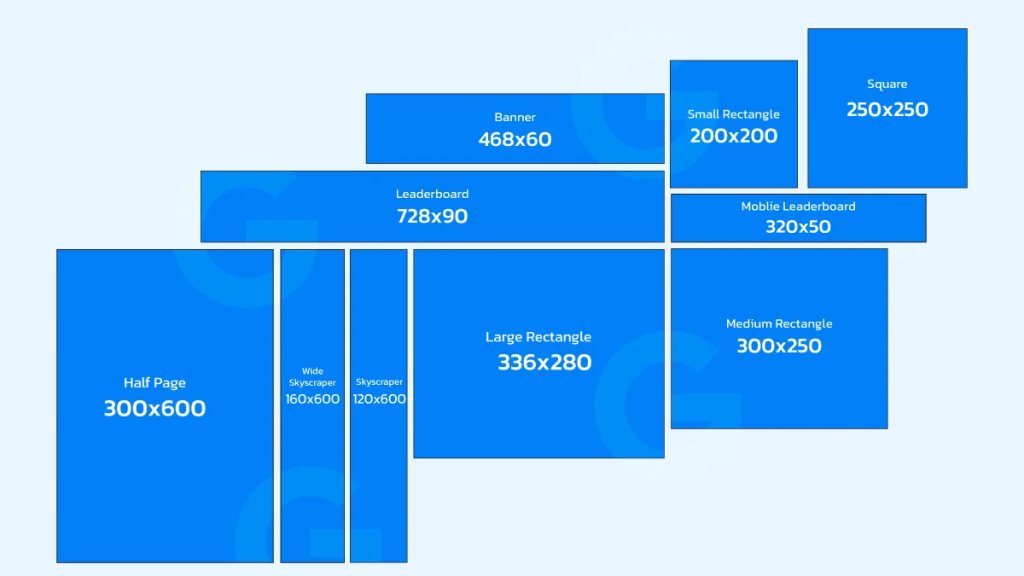
Standard Banner Sizes in Digital Advertising

Common Standard Banner Sizes

  1. Leaderboard (728×90): The leaderboard is a popular banner size characterized by its horizontal layout. It is typically placed at the top of web pages and is ideal for showcasing brand messages, promotions, and calls-to-action.
  2. Medium Rectangle (300×250): The medium rectangle is a versatile banner size that fits seamlessly within content sections of websites. It offers ample space for compelling visuals and engaging content, making it suitable for both desktop and mobile advertising.
  3. Skyscraper (160×600): The skyscraper banner size features a tall and narrow layout, making it well-suited for sidebars and vertical ad placements. It provides ample visibility and stands out in cluttered website layouts, making it effective for driving brand awareness and engagement.
  4. Square (250×250): The square banner size offers a balanced and compact layout, making it suitable for placement within content blocks and sidebar widgets. It provides advertisers with a versatile option for promoting products, services, and special offers.
  5. Large Rectangle (336×280): The large rectangle is a spacious banner size that offers ample room for impactful visuals and persuasive messaging. It is often placed within article content and serves as a focal point for capturing audience attention and driving conversions.

Understanding Digital Advertising Metrics: CPC, CPM, CPL, and CPA

In the realm of digital advertising, understanding key metrics is essential for marketers aiming to optimize their campaigns and drive meaningful results. Among the plethora of metrics available, CPC, CPM, CPL, and CPA stand out as fundamental indicators of campaign performance and effectiveness. In this article, we delve into the definitions, functionalities, and significance of these metrics, shedding light on their roles in the digital advertising landscape.

CPC: Cost Per Click

Definition: Cost Per Click (CPC) is a pricing model where advertisers pay for each click on their ads. It is one of the most common metrics used in paid search and display advertising campaigns.

Functionality: Advertisers bid on keywords or ad placements, and they are charged each time a user clicks on their ad. CPC campaigns are often associated with search engine marketing (SEM) platforms like Google Ads and Bing Ads, as well as social media advertising platforms such as Facebook Ads and LinkedIn Ads.

Significance: CPC is an important metric for measuring the effectiveness of ad campaigns in driving traffic to a website or landing page. It allows advertisers to assess the cost-effectiveness of their campaigns and optimize their bidding strategies to achieve desired objectives.

CPM: Cost Per Mille (Thousand Impressions)

Definition: Cost Per Mille (CPM), also known as Cost Per Thousand Impressions, is a pricing model where advertisers pay for every one thousand impressions of their ad.

Functionality: In CPM campaigns, advertisers pay a fixed rate for every thousand impressions, regardless of whether users interact with the ad or not. CPM is commonly used in display advertising, including banner ads, native ads, and video ads.

Significance: CPM is a valuable metric for increasing brand visibility and awareness. It allows advertisers to reach a large audience and generate impressions at scale, making it suitable for branding and awareness-focused campaigns.

CPL: Cost Per Lead

Definition: Cost Per Lead (CPL) is a pricing model where advertisers pay for each qualified lead generated through their advertising efforts.

Functionality: CPL campaigns are prevalent in lead generation and performance marketing initiatives. Advertisers define specific actions or criteria that constitute a qualified lead, such as form submissions, email sign-ups, or app downloads.

Significance: CPL provides advertisers with a measurable way to assess the efficiency of their lead generation efforts. By tracking the cost per lead acquired, marketers can evaluate campaign performance and allocate resources effectively to maximize ROI.

CPA: Cost Per Acquisition

Definition: Cost Per Acquisition (CPA), also known as Cost Per Action, is a pricing model where advertisers pay for a specific action or conversion resulting from their advertising campaigns.

Functionality: CPA campaigns focus on driving desired actions such as purchases, sign-ups, registrations, or downloads. Advertisers define the conversion goals, and they are charged only when users complete the specified action.

Significance: CPA is a critical metric for measuring the return on investment (ROI) of advertising campaigns. By tracking the cost per acquisition, advertisers can evaluate the effectiveness of their marketing efforts in driving meaningful outcomes and achieving business objectives.

Conclusion: In the dynamic landscape of digital advertising, CPC, CPM, CPL, and CPA serve as vital metrics for assessing campaign performance, optimizing strategies, and maximizing ROI. By understanding the functionalities and significance of these metrics, marketers can make informed decisions and drive impactful results in their digital advertising endeavors. As the digital advertising ecosystem continues to evolve, leveraging these key metrics will remain essential for achieving success in today’s competitive marketplace.

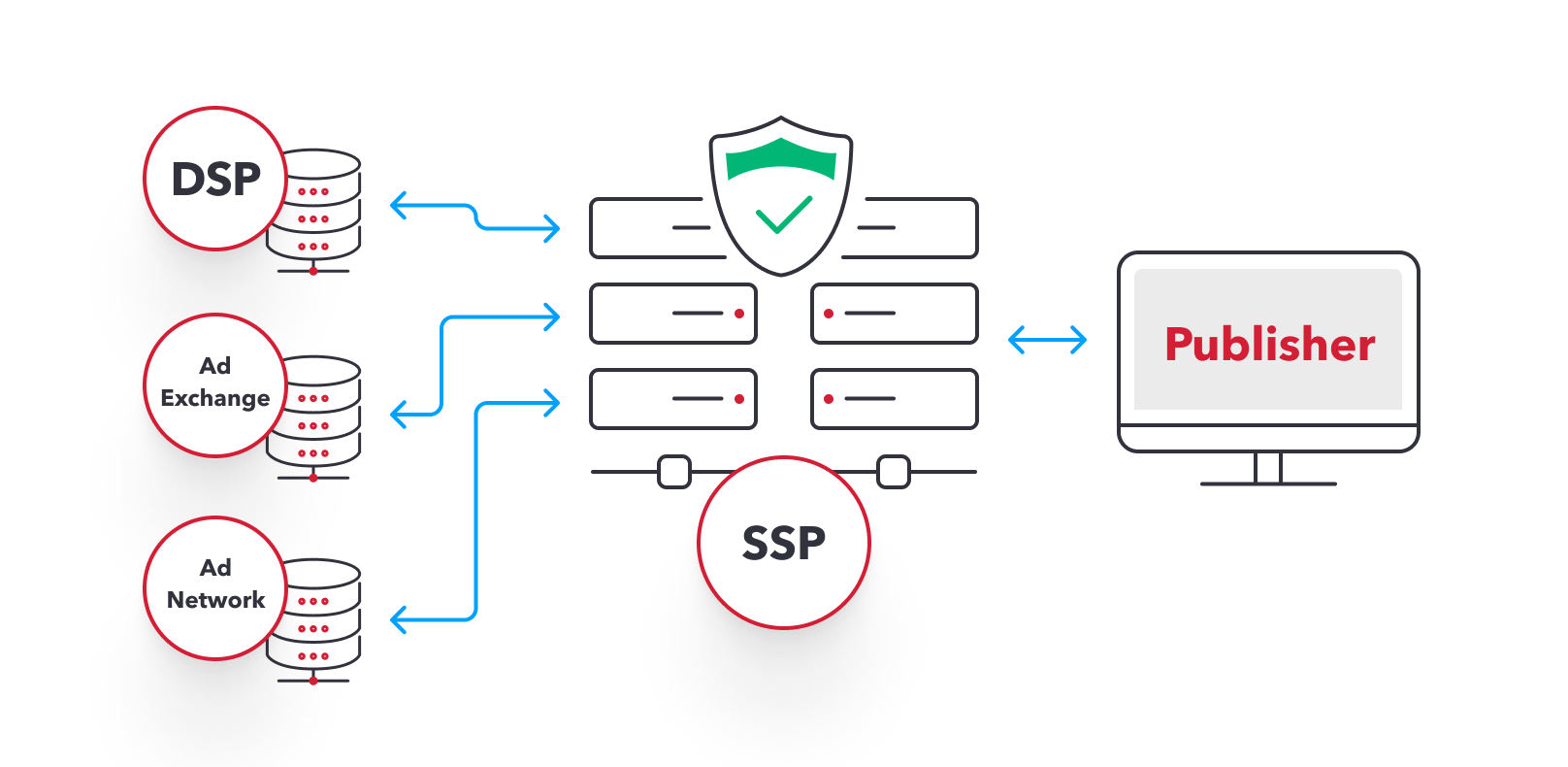
Difference Between DSP and SSP in Programmatic Advertising

In the realm of programmatic advertising, the terms Demand-Side Platform (DSP) and Supply-Side Platform (SSP) play crucial roles in facilitating the buying and selling of digital ad inventory. While they both operate within the programmatic ecosystem, their functions and objectives are distinct. Understanding the difference between DSP and SSP is essential for advertisers, publishers, and marketers aiming to navigate the complexities of digital advertising efficiently.

DSP: Demystifying Demand-Side Platforms (DSP)

Definition and Functionality: A Demand-Side Platform (DSP) is a technology platform utilized by advertisers and agencies to purchase digital ad inventory across various publishers and ad exchanges. The primary function of a DSP is to enable advertisers to manage, optimize, and execute their ad campaigns in real-time through a single interface.

Key Features and Capabilities:

  • Targeting Capabilities: DSPs offer sophisticated targeting options, including demographic targeting, behavioral targeting, contextual targeting, and geographic targeting.
  • Real-Time Bidding (RTB): DSPs leverage RTB technology to bid on ad impressions in real-time based on predetermined criteria and user data.
  • Optimization: DSPs use algorithms and data analysis to optimize ad campaigns for maximum performance and efficiency.
  • Reporting and Analytics: DSPs provide comprehensive reporting and analytics tools to track campaign performance, audience engagement, and ROI.

SSP: Deciphering Supply-Side Platforms (SSP)

Definition and Functionality: A Supply-Side Platform (SSP) is a technology platform utilized by publishers and app developers to manage and monetize their digital ad inventory. SSPs serve as intermediaries between publishers and ad exchanges, enabling publishers to sell their ad inventory programmatically.

Key Features and Capabilities:

  • Inventory Management: SSPs allow publishers to manage and organize their ad inventory across various formats, including display, video, and mobile.
  • Yield Optimization: SSPs use algorithms and pricing rules to optimize the value of ad impressions and maximize revenue for publishers.
  • Real-Time Reporting: SSPs provide real-time reporting and insights into ad performance, fill rates, and revenue metrics.
  • Header Bidding Integration: Many SSPs support header bidding technology, allowing publishers to offer their ad inventory to multiple demand sources simultaneously.

Distinguishing Between DSP and SSP:

While both DSPs and SSPs operate within the programmatic advertising ecosystem, they serve distinct purposes and cater to different stakeholders.

  • DSPs are designed for advertisers seeking to reach their target audience across various digital channels through targeted ad placements.
  • SSPs are designed for publishers looking to monetize their digital properties by selling ad inventory to advertisers and agencies programmatically.

Conclusion: In conclusion, understanding the difference between DSP and SSP is crucial for navigating the complexities of programmatic advertising effectively. While DSPs enable advertisers to purchase ad inventory and target audiences across multiple channels, SSPs empower publishers to manage and monetize their digital ad inventory efficiently. By leveraging the capabilities of both DSPs and SSPs, advertisers and publishers can optimize their digital advertising strategies and drive better results in today’s dynamic digital landscape.

Retail Media Networks: The Next Major Growth Opportunity in AdTech

One of the most important developments in digital advertising is happening at the intersection of advertising and commerce.

Retailers are increasingly transforming their websites, apps, stores, and customer data into advertising platforms.

These businesses are commonly known as Retail Media Networks, and they are becoming an increasingly important part of the AdTech ecosystem.

What Is Retail Media?

Retail media refers to advertisements delivered through a retailer’s properties or using a retailer’s commerce data.

A retailer may allow brands to advertise through formats such as:

  • Sponsored search results
  • Product listing advertisements
  • Display advertising
  • Homepage promotions
  • Video advertisements
  • Off-site programmatic campaigns
  • In-store digital screens

For consumer brands, retail media creates an opportunity to reach customers close to the point of purchase.

Why Retail Media Is Attractive to Advertisers

Traditional digital advertising often creates distance between advertising exposure and purchase.

A person might see an advertisement on one website and buy the product days later somewhere else.

Retail media can shorten that distance.

If someone searches for “wireless headphones” on an e-commerce website, an electronics brand may be able to promote its product directly within those search results.

The consumer already has relatively strong purchase intent.

This makes retail media particularly attractive to performance-focused advertisers.

First-Party Commerce Data Is a Major Advantage

Retailers have another valuable asset: first-party shopping data.

Depending on consent, regulation, and platform policies, retailers may understand signals such as:

  • Products customers search for
  • Categories they browse
  • Previous purchases
  • Brand preferences
  • Shopping frequency
  • Basket composition

These insights can help advertisers build highly relevant campaigns.

In a privacy-conscious advertising environment, first-party commerce relationships are becoming increasingly valuable.

Closed-Loop Measurement

Measurement is another major advantage of retail media.

Retailers operate close to the transaction itself.

This means they may be able to connect advertising exposure with product sales more directly than many traditional advertising platforms.

For example, a brand could potentially measure how many customers who saw a sponsored advertisement eventually purchased the promoted product.

This type of closed-loop measurement can make advertising investment easier to evaluate.

Retail Media Is Expanding Beyond Retail Websites

Retail media originally focused heavily on sponsored product listings inside e-commerce marketplaces.

The model is now expanding.

Retailers can work with AdTech partners to reach audiences across external websites, mobile apps, connected television, and other channels while using retail data to inform campaigns.

Physical stores are also becoming advertising environments.

Digital signage, connected screens, smart displays, and other technologies can potentially bring programmatic advertising techniques into physical retail locations.

The distinction between “digital advertising” and “in-store advertising” may therefore become increasingly blurred.

The Challenge of Fragmentation

Retail media also has challenges.

As more retailers build their own advertising businesses, brands may need to manage campaigns across many different platforms.

Each network can have different:

  • Advertising formats
  • Reporting systems
  • Measurement standards
  • Audience definitions
  • APIs
  • Attribution methods

For advertisers, managing dozens of separate retail media platforms can become complicated.

This creates a significant opportunity for AdTech companies that can provide unified campaign management, reporting, optimization, and measurement across multiple retail media networks.

What Retail Media Means for AdTech

Retail media demonstrates how the definition of an advertising platform is changing.

Advertising inventory is no longer limited to publishers, search engines, and social networks.

Retailers, delivery platforms, financial services companies, travel platforms, and other businesses with strong customer relationships can potentially develop their own media businesses.

For the AdTech industry, this creates a new generation of advertising supply, data partnerships, measurement systems, and programmatic infrastructure.

Retail media is therefore more than another advertising channel.

It represents the growing convergence of advertising, data, commerce, and technology—a combination that is likely to shape the next phase of the AdTech industry.

Understanding the AdTech Ecosystem: DSPs, SSPs, Ad Exchanges and Publishers

Digital advertising may appear simple from the outside.

A person visits a website, an advertisement appears, and the advertiser pays for the exposure.

Behind that single impression, however, a surprisingly complex technology ecosystem can operate in a fraction of a second.

Understanding the major components of this ecosystem is essential for anyone working in digital advertising.

What Is AdTech?

AdTech, short for advertising technology, refers to the software and infrastructure used to buy, sell, deliver, optimize, and measure digital advertising.

The ecosystem connects two main groups.

On one side are advertisers, who want to reach potential customers.

On the other are publishers, who have digital advertising space available on websites, apps, streaming services, and other digital properties.

AdTech platforms help connect supply with demand.

Demand-Side Platforms

A Demand-Side Platform, or DSP, is technology used by advertisers and agencies to purchase digital advertising inventory.

Instead of negotiating separately with hundreds of publishers, advertisers can use a DSP to access large quantities of advertising inventory programmatically.

Through a DSP, advertisers may control:

  • Campaign budgets
  • Audience targeting
  • Geographic targeting
  • Frequency limits
  • Bid strategies
  • Creative formats
  • Performance optimization

When a suitable advertising opportunity becomes available, the DSP evaluates the impression and decides whether to bid.

Supply-Side Platforms

On the publisher side of the ecosystem are Supply-Side Platforms, or SSPs.

Publishers use SSPs to manage and monetize their advertising inventory.

An SSP can make advertising opportunities available to multiple buyers and help publishers maximize the value of their inventory.

For example, instead of selling an impression to the first available advertiser, the SSP may allow multiple demand sources to compete for it.

That competition can help publishers improve yield.

What Is an Ad Exchange?

An ad exchange acts as a digital marketplace where advertising inventory can be bought and sold.

DSPs representing advertisers can submit bids while SSPs representing publishers make inventory available.

Many of these transactions happen through real-time bidding.

The entire process may take place within milliseconds while a webpage or app is loading.

How Real-Time Bidding Works

Imagine someone opens a news website.

Before the advertisement appears, several events may happen almost instantly.

The publisher makes the advertising opportunity available through its technology partners.

Information about the impression—such as the content category, device type, approximate location, and advertising format—can be sent to potential buyers.

DSPs evaluate the opportunity.

Interested advertisers submit bids.

A winner is selected according to the auction rules.

The winning creative is served to the user.

To the visitor, this entire system appears to happen immediately.

Where Ad Servers Fit In

Ad servers are responsible for storing, delivering, and tracking advertising creatives.

They can help determine which advertisement should be displayed and collect information about impressions, clicks, and other campaign events.

Advertisers may use ad servers to manage campaigns across multiple platforms, while publishers may use their own systems to manage inventory and delivery.

The Role of Data

Data connects many components of the AdTech ecosystem.

Advertisers use data to understand audiences, optimize campaigns, and measure outcomes.

Publishers use data to understand their users and the value of their advertising inventory.

However, the way advertising data is collected and shared is changing rapidly due to privacy regulations and platform restrictions.

As a result, the industry is increasingly focusing on first-party data, contextual signals, privacy-preserving measurement, and consent-based technologies.

Why Understanding the Ecosystem Matters

Programmatic advertising becomes much easier to understand once the roles of the major participants are clear.

In simplified terms:

Advertiser → DSP → Ad Exchange/Marketplace → SSP → Publisher → Consumer

The real ecosystem can be considerably more complicated, with verification companies, identity providers, measurement platforms, data companies, retail media networks, and other technology providers participating as well.

Despite that complexity, the goal remains relatively straightforward: connect the right advertising opportunity with the right advertiser efficiently and responsibly.

The Cookieless Advertising Era: What Advertisers Need to Know

For years, third-party cookies played an important role in digital advertising. They helped advertisers understand user behavior across websites, build audience segments, measure conversions, and run retargeting campaigns.

However, the digital advertising ecosystem is becoming increasingly privacy-focused.

Browser restrictions, regulatory developments, mobile privacy controls, and changing consumer expectations are forcing advertisers and AdTech companies to rethink how online advertising works.

The result is not necessarily the end of targeted advertising. Instead, the industry is moving toward a new generation of privacy-conscious advertising technologies.

Why the Advertising Industry Is Changing

Consumers have become more aware of how their information is collected and used online.

At the same time, privacy regulations and technology platforms have introduced stronger controls around data collection.

These changes have created a significant challenge for advertisers.

For many years, digital advertising strategies were built around the ability to identify users across different websites and applications. As those identifiers become less accessible, advertisers need alternative methods for understanding audiences and measuring campaign performance.

First-Party Data Is Becoming More Valuable

One of the biggest changes is the growing importance of first-party data.

First-party data is information collected directly through a company’s relationship with its customers or users.

Examples can include:

  • Website registrations
  • Newsletter subscriptions
  • Purchase history
  • Customer preferences
  • CRM information
  • Loyalty programs
  • App activity

Because the company has a direct relationship with the customer, first-party data can provide valuable insights without relying entirely on third-party tracking technologies.

Brands that build strong direct relationships with their audiences may therefore have an important advantage in the evolving advertising ecosystem.

Contextual Advertising Is Returning

Contextual advertising is also receiving renewed attention.

Instead of identifying a particular user, contextual advertising focuses on the content surrounding the advertisement.

For example, a company selling running shoes could place advertisements alongside articles about marathon training, fitness, or outdoor sports.

Modern contextual advertising is much more sophisticated than simple keyword matching.

AI-powered systems can analyze topics, sentiment, content categories, page structure, and other signals to determine whether a particular advertisement is relevant to the environment.

This allows advertisers to reach relevant audiences without depending entirely on cross-site behavioral profiles.

The Growth of Privacy-Preserving Technologies

AdTech companies are also developing technologies designed to support advertising while minimizing unnecessary exposure of user-level information.

These approaches include techniques such as:

  • Data clean rooms
  • Aggregated measurement
  • Consent-based identity solutions
  • Cohort-based targeting
  • Privacy-enhancing technologies
  • Modeled conversions

Data clean rooms, in particular, allow companies to compare datasets in controlled environments without necessarily sharing raw customer-level information with one another.

These systems may become increasingly important for campaign measurement and audience analysis.

Measurement Will Need to Change

One of the greatest challenges in privacy-first advertising is attribution.

Advertisers naturally want to know which advertisements generated conversions.

Historically, marketers often relied on user-level tracking to connect an impression or click with a later purchase.

As access to that information becomes more limited, advertisers are increasingly exploring alternative measurement methods, including incrementality testing, marketing mix modeling, aggregated attribution, and conversion modeling.

Rather than attempting to track every individual journey perfectly, marketers may need to become more comfortable working with probabilistic and aggregated insights.

Privacy Can Become a Competitive Advantage

Privacy is sometimes described as an obstacle for digital advertising.

It can also be an opportunity.

Companies that clearly explain how customer data is used and give consumers meaningful control over their information can potentially build stronger relationships with their audiences.

The most successful AdTech solutions of the future are therefore likely to combine advertising effectiveness with responsible data practices.

The cookieless era is not simply about replacing one tracking technology with another.

It represents a broader transformation in how digital advertising understands identity, relevance, measurement, and trust.

The Future of AdTech: How AI Is Transforming Digital Advertising

The advertising technology industry has always evolved quickly, but artificial intelligence is accelerating that transformation at an unprecedented pace. From campaign planning and audience segmentation to creative optimization and real-time bidding, AI is becoming part of nearly every stage of the digital advertising ecosystem.

For advertisers, this shift creates an opportunity to move away from manual campaign management and toward intelligent, automated decision-making.

AI Is Changing How Advertisers Understand Audiences

Traditional digital advertising relied heavily on predefined audience segments. Marketers would group users according to demographics, interests, browsing behavior, or purchase history.

AI allows advertisers to go much deeper.

Machine-learning systems can analyze large volumes of behavioral and contextual signals to identify patterns that human campaign managers might overlook. Instead of simply targeting “people interested in travel,” for example, an advertising platform could identify groups of users who are statistically more likely to book a holiday within the next several days.

This type of predictive audience modeling allows campaigns to become more precise while reducing unnecessary ad impressions.

Smarter Programmatic Bidding

Programmatic advertising already enables advertisers to purchase impressions automatically through real-time auctions. AI makes those auctions more intelligent.

Rather than assigning the same value to every impression within an audience segment, machine-learning algorithms can estimate the potential value of each advertising opportunity.

Factors may include:

  • Device and browser type
  • Website or app context
  • Time of day
  • Historical engagement
  • Conversion probability
  • Campaign performance signals

The system can then adjust bids automatically.

As a result, advertisers can potentially allocate more budget toward impressions that have a higher likelihood of producing meaningful outcomes.

Generative AI and Advertising Creative

One of the most visible changes in AdTech is the rise of generative AI.

Advertisers can now use AI tools to produce multiple versions of headlines, images, descriptions, video concepts, and calls to action. Those variations can then be tested across different audiences.

Dynamic Creative Optimization, commonly known as DCO, can take this idea even further.

Instead of showing every user the same advertisement, an AdTech platform can automatically select combinations of creative elements based on audience and contextual signals.

A travel company, for example, could show beach imagery to one audience and city-break messaging to another while promoting the same overall campaign.

AI Can Improve Campaign Optimization

Traditionally, campaign managers reviewed reports and manually adjusted targeting, bids, budgets, and creatives.

AI-powered advertising systems can continuously evaluate campaign performance and make adjustments automatically.

Budget might be shifted toward better-performing channels. Underperforming placements can be reduced. Creative combinations can be tested and replaced.

Campaign optimization therefore becomes a continuous process rather than something that happens once every few days.

The Importance of Transparency

Despite its potential, AI also creates new challenges.

Advertisers increasingly want to understand how automated systems are making decisions. Publishers want to know how their inventory is being valued. Regulators are paying greater attention to automated decision-making and data usage.

For AdTech companies, transparency will become an important competitive advantage.

Platforms that can explain how optimization works, what data is being used, and how advertising decisions are made may be better positioned to earn long-term trust from customers.

What Comes Next?

The future of AdTech is unlikely to be about replacing marketers with machines.

Instead, AI will increasingly handle the repetitive analytical work involved in digital advertising while humans focus on strategy, positioning, storytelling, and creativity.

The companies that succeed will be those that combine advanced automation with responsible data practices and meaningful human oversight.

AI is not simply another feature being added to advertising platforms. It is becoming part of the underlying infrastructure of modern digital advertising.

Boost Engagement with Sliding Footer Display Ads

Introduction

In today’s competitive digital landscape, grabbing user attention without ruining the browsing experience is key. One highly effective solution is the sliding footer display ad — a smart, non-intrusive ad format that appears at the bottom of the screen and smoothly slides into view.

📌 What is a Sliding Footer Ad?

A sliding footer ad is a banner-style advertisement that appears at the bottom of a webpage and slides into view as users scroll or after a delay. Unlike pop-ups, it does not interrupt the user’s activity, making it more user-friendly and effective.

Why Use Sliding Footer Ads?

  • Better Visibility: Always stays in view while users scroll
  • Non-Intrusive: Doesn’t block main content
  • Higher CTR: Subtle animation attracts attention
  • Mobile-Friendly: Works great on all screen sizes

⚙️ How It Works

Sliding footer ads typically load after the page content and appear with a smooth animation from the bottom. They can be triggered by:

  • Scroll percentage (e.g., after 30% scroll)
  • Time delay (e.g., after 5 seconds)
  • Exit intent (optional for desktop)

💡 Best Practices

  • Keep the design clean and responsive
  • Avoid overly large banners (recommended: 320×50 or 728×90)
  • Add a close button for better UX
  • Ensure fast loading to avoid performance issues

Exit mobile version